Candida Martinelli's Italophile Site
Main
Page This family-friendly site celebrates Italian culture for the enjoyment of children and
adults. Site-Overview
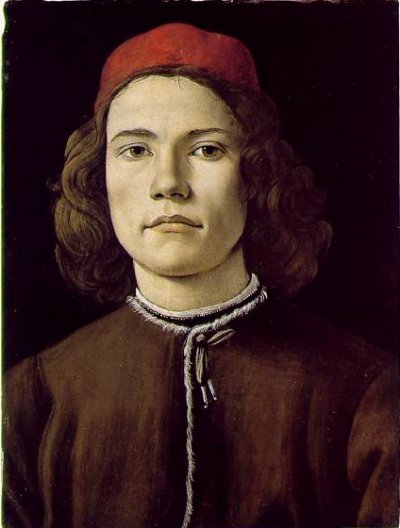
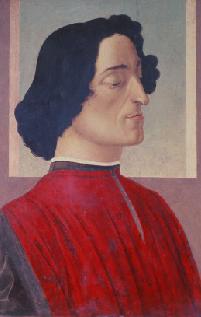
Portrait of a Young Man by Sandro Botticelli
Some links to information that might interest readers of Ms. Proud's
Tabernacle of the Sun: The U. S. Library of
Congress, together with the Vatican Library, have an online guide to an
exhibit on Rome and Humanism during the Italian Renaissance. They
show you pages from the original texts, many of which are mentioned in
this book. They cover various subjects from the era.
There are lots of theories out there concerning many
of Botticelli's paintings, and there are very interesting ones in Ms. Proud's books. Botticelli left behind not just beautiful
paintings, but puzzles for all to enjoy.
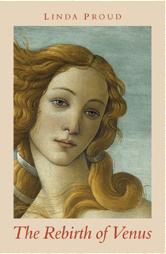
Botticelli's Birth of Venus and La Primavera, a new theory interpreting
their meanings
at Aiwaz.net an art history site
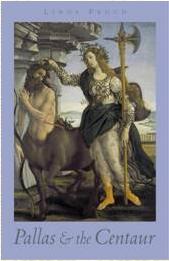
Pallas and
the Centaur at wikipedia
The Birth of Venus at wikipdia
The rebellion of Volterra during Lorenzo de' Medici's time, as described
by Machiavelli in his History of Florence. Go to the mid-point of
the chapter in this link to find the part about Volterra. Pazzi
Conspiracy, as described by Machiavelli in his History of Florence.
The formation of the plot, and the order to kill
The attack and immediate aftermath
The longer term aftermath, papal war
Biographies on this site of:
Filipino Lippi and his
father Fra Lippi It is a trade paperback, of 490 pages, divided into 5 'books',
representing 5 phases of the fictional narrator's early life, Tommaso
de' Maffei. Historical novels have an appeal over history books, because
they bring dry history to life through characters who speak directly to
us and allow us to enter their hearts and heads. The historical
novel allows us to be a fly-on-the-wall during fascinating moments in
times long past. Ms. Proud's novel does this through her fictional, first-person
narrator, Tommaso de' Maffei, who grows from child to young man in the
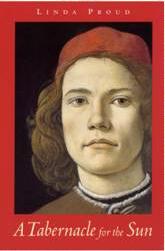
course of this novel, and we follow him along through his adventures. The book cover features one of
Botticelli's Portrait of a Young Man painting. It appears
to be the physical inspiration for the fictional Tommaso character.
Most of the other major characters in the book are based on real
people from the Italian Renaissance, and the author stays very close to
history in their depiction and the description of events. To be honest, while reading the book, I couldn't help thinking of
Forrest Gump, the fictional book/film character who was inserted into
many of the key moments of U.S. popular culture from the past few
decades. In the same way, Tommaso de' Maffei is present at many of
the key moments of de' Medici history. But Tommaso sees and speaks with the knowledge of a mature man
looking back on his life, as he writes his story in 1500 for his fellow
humanist-intellectual, Erasmus of Rotterdam. This narrative device
creates another layer of interest for the history-loving reader.
The seeds of humanist, neo-Platonic study planted in Florence during
the early years of the de' Medici influence, blossomed in later years,
and eventually became a threat to the Catholic church. Through Tommaso,
we get a glance at the origins of the New Learning as well as where that
New Learning lead. Ms. Proud is a fluid writer who has a highly developed skill of
putting herself in her character's shoes. Her detailed
descriptions of life in Volterra, Florence and Rome make you wonder if
perhaps she didn't live there in a previous life in years gone by. I especially enjoyed her descriptions when Tommaso, a young boy who
has known only life in the rustic hill town of Volterra, goes to
Florence for the first time. Through her narrator, but with her
own reflective and intuitive perspective, Ms. Proud paints a picture of
Florence that the reader will never forget. Tommaso even comments at one point that: "It makes your buttocks ache
walking on flat ground all the time." And later, when his calves
hurt after a short run up a hill in Florence, Tommaso reflects that he
has adapted more than he realized to life in Florence, and not just
physically. Even if you have been to Volterra and Florence and toured all there
is to see (which is a difficult feat), you will find yourself seeing the
towns with a new perspective, thanks to Ms. Proud's highly reflective
views on churches, artworks, houses and even streets. The author is also clearly a student of music, which adds another dimension
to her description of Renaissance life. Music was part of the New
Learning. Music was a part of art, architecture, design, education
and mathematics. Ms. Proud manages to integrate music into
learning in a way that one wishes were done today. It might
inspire more students! Ms. Proud is English, but understands very well Italy, Italians and
the regional characteristics that distinguish Italy even today.
The most amusing passages in her book, in my view, were when she
represented an Italian's view of England in 1500, such as this passage. "We have a phrase in Italian: fare belle figura.
Some would say that to cut a fine figure is more important to an Italian
than anything else in the universe, save perhaps avoiding damnation.
It is possibly true. I notice, for instance, that the English
spend more on their furniture than on their clothes, which is why I
would rather be in one of the houses than out in their company." And she tackles kisses, food and the weather, too. The author shows a strong grasp of the history and the personalities
of the period but assumes, perhaps generously, that her readers share
her vast knowledge. I've studied the era, but I found myself making lists of people,
places, things and events to look up each evening, to help me better appreciate
what I was reading. Perhaps in a new edition of the books, she will provide a Glossary of
people, places, events and things. It would make a nice
addition to the book. (I've heard from the author, and she intends
to have a Glossary up soon on her website.) The novel puts the reader in the period and guides the reader through
interesting times and challenging ideas. But the story, as told by Tommaso de' Maffei, is suitable for young adult readers as well as adult
readers. A Tabernacle for the Sun is a wonderful book for those who
wish to learn more about the fascinating time of the Italian
Renaissance, and for those who wish their knowledge of that time to
be placed in a novel setting, bringing it to life. If you know
the history, don't expect surprises, but do expect to see it through new
eyes. Ms. Proud continues the story with two books
that together with A Tabernacle for the Sun make up her
Botticelli Trilogy, described
below.
Tabernacle of the Sun is divided into 5 Books, each describing a
phase in young Tommaso de' Maffei's life. If you'd like to know
generally what those phases are, read on. If not, skip down to
read about the two sequel books by the author. WARNING -
SPOILERS
The Botticelli Trilogy by Linda Proud (A Tabernacle for the
Sun, Pallas and the Centaur, The Rebirth of Venus)
This trilogy by historian/novelist Linda Proud is a real
accomplishment. She manages to bring to life Lorenzo de'
Medici's Italy through characters key to the Italian Renaissance,
but never loses sight of the human aspect of that time of clashing
ideas from the Medieval and from the rebirth of classic knowledge and
philosophy. I link to her publisher's site,
Godstow Press, where you can read about the books and
enjoy excerpts from the three novels. You can purchase the books
via Amazon.uk. A
Tabernacle for the Sun is told by Tommaso de' Maffei, whose
story involves the Pazzi Conspiracy against the de' Medici, and many
thinkers and artists of the time including Marsilio Ficino, Angelo
Poliziano, Lorenzo de' Medici, Botticelli and Filipino Lippi.
Excerpt. Pallas and the
Centaur takes up where the first book leaves off and is told by
Angelo Poliziano, poet and intellectual. The Pazzi Wars follow the
assassination attempt on the de' Medici, which took the life of
Lorenzo's brother, Giuliano. But there is a war of ideas that is
just as heated, between superstitious Medieval, God and church centered
Europe, and the new Europe of the rational, man-centered neo-Platonists.
Excerpt. The Rebirth of
Venus is a chronicle by Tommaso de' Maffei written for Erasmus, whom
he will accompany to Florence. It details Tommaso's life in
Florence under Lorenzo de' Medici's rule, after the Pazzi Wars are over.
Tommaso becomes a printer and eventually moves to Venice, then to
London. He is in exile because be became too closely involved with
the charismatic, religious extremist Savonarola.
Excerpt (pdf). Visit Ms. Proud's website
for some itineraries to consult before your next visit to Florence.
And there is an entry
at Wikipedia about her, too. For a brief history of the De' Medici
dynasty, visit my Medici pages. You can purchase the books via
Godstow Press
or via
Amazon.uk.


Review of
A Tabernacle for the Sun by Linda Proud

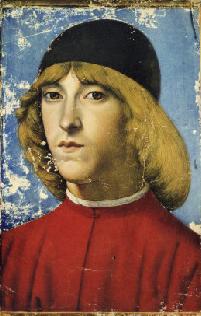

Piero Di Lorenzo De' Medici
A Tabernacle for the Sun, by Linda Proud, is
a historical novel set in 1472-1478, the time of Lorenzo de' Medici, and
takes place in Volterra, Rome and Florence, Italy.
The story continues...