Candida Martinelli's Italophile Site
Main
Page This site celebrates Italian culture for the enjoyment of children and
adults. Site-Overview
Candida Martinelli's Italophile Site Shops at: Zazzle & PrintFection Some products from
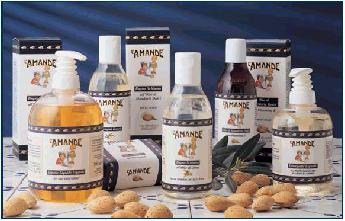
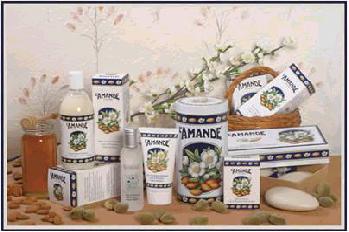
the Menage Line Almond
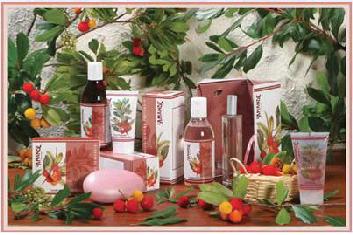
Milk and Honey products from the Armomatique Line The line includes the local Ligurian scents of: Anise
and Blackberry, Lemon Balm and Black Cherry, Masterwort and
Pomegranate, Elder and Strawberry Trees, Wormwood and Black Current,
Almond Milk and Honey, Lavender and Myrtle. The
Elder and Strawberry Products / Armomatique Line Eau
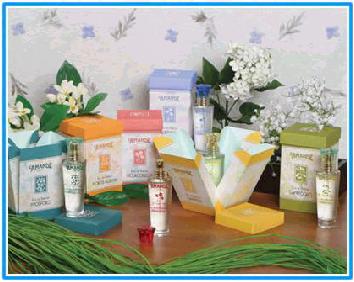
di parfum from the Fleuri Line The line includes the local Ligurian floral scents of:
Honeysuckle, Cornflower, Citrus Blooms, Broom, Butterbush,
Gillyflower. You can read about these scents on their site.
The
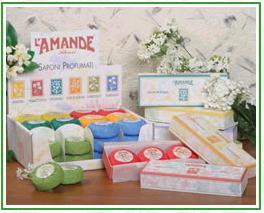
Perfumed Soaps from the Fleuri Line
Italians, like most
Europeans, prefer liquid soaps in their baths and for their
hands. Those soaps tend to be international brands from international companies. But there are some Italian companies that produce the traditional bar
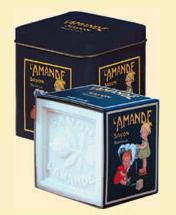
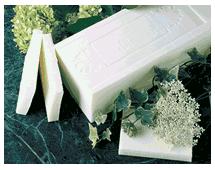
soaps, like the Sapone di Marseilles (a castile soap
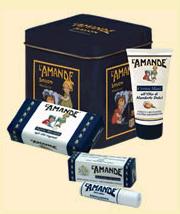
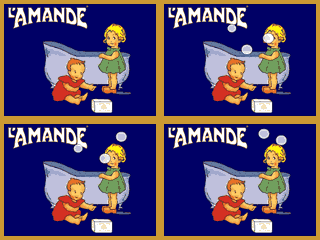
made with olive oil). One of those companies is L'Amande.
They have a wonderful website that I link through to so you can
get more information on their beautiful products. L'Amande has done a wonderful job of keeping the old
products, while adapting to the new products customers want.
Their Marseilles Line,
for example, includes shampoos, liquid soaps, oils, creams,
deodorants, lip moisturizers, even toothpaste! And they have several other lines too: Sapone
di Marseilles gift packs Ligurian
scents, natural bath and beauty products Ligurian
floral scents in bath foams, soaps, and eau di parfum, in boxed sets L'Amande distributes exclusively through select erboristerie
(herbalists) and farmacie (pharmacies) in Italy. So when you're in Italy, check for
one near you on their distributor map. And when in Italy, be sure to check out some of the other erboristerie
and farmacie. Many produce their own soaps
and scents. If you're not in Italy, or planning on being there anytime soon, the
on-line store Cybercucina has a line of scents, creams and soaps called
L'erborlaio. If you're not in Italy, you can always find pure, olive oil
castile soap on-line from Caswell and Massey America's oldest chemists and perfumers (from
1752).
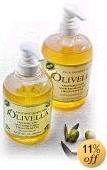
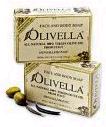
Another source is Amazon.com's Olivella olive oil soaps: bar
soaps, liquid soaps, and moisturizer.
Olivella Olive Oil Soaps at Amazon.com But for a truly Italian/Mediterranean scented soap,
there can only be one: rosemary soap. Rosemary grows wild throughout the
Mediterranean basin, and has been used for centuries in
incense, ointments, and beauty products. Rosemary's aroma is known to stimulate the memory,
and to reduce nervous tension. So when you use rosemary soap,
you can first remember, and then lather your cares away. You can normally find rosemary soap, often in
combination with lavender, at herbalist or health food stores.
And there are many rosemary soaps available from Amazon.com
(oils and creams, too). Rosemary
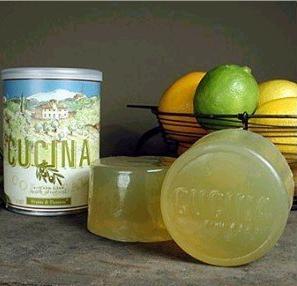
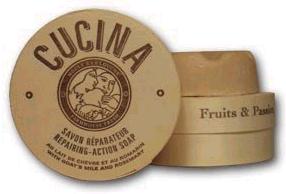
Soaps and Oils at Amazon.com One of the soaps available from Amazon.com is Cucina's rosemary and goat's
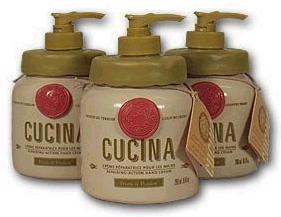
milk exfoliating soap. They offer other interesting items such as ginger and
Sicilian lemon hand cream, and a kitchen soap with lemon and
olive oil, to remove food scents from your hands.
Cucina's
Ginger and Sicilian Lemons Hand Cream at Amazon
The history of perfume begins with the burning of
incense made of aromatic plants, woods, resins, spices for
religious ceremonies. (The word perfume comes from the Latin
for 'by smoke'.) From
at least 7000bc scents of plants were mixed with olive oil and
sesame oil for use directly on the skin and hair. There is
some evidence that the distillation of scents from plants in
the form of essential oils was a common practice in
3000bc. The transfer of knowledge went as so much did, from
the far east, to the near east, to the Mediterranean basin. In
the case of perfume, there it remained. The Medici of
Tuscany, Italy, brought perfumes to Paris with Catherine de Medici
(image below is of a young Catherine with the typical Renaissance
plucked forehead to raise the hair line).
Italian perfumers set up shop there, and sourced their
materials from near and far. Much came and still comes from
Montpellier and Grasse, in the south of France.
Dr. Giovanni di Massimo, a
Florentine perfumer, apothecary and founder of I Profumi di
Firenze, discovered Catherine de' Medici's perfume recipes as
well as other Medici fragrance formulas when Many of the I Profumi di
Firenze fragrances are available via Amazon.com. Each product
description says exactly the fragrances in the perfume, such as
Bergamot, Magnolia, Grapefruit, Lemon, Orange, Damascus Rose, Iris,
Jasmine, Cardamon, Vanilla, and Honeysuckle. I Profumi di Firenze Perfumes at Amazon.com Every Italian designer offers a perfume line. Below, I
feature many of the more popular ones, with descriptions of the
scents. You may want to get several scents for your
various moods and settings (home, work, play, elegant event...). Be sure to try a perfume on your skin (not
just the paper strips or 'touches' sellers use) because all
scents change after a few moments in contact with your skin,
and they change differently with each person. Test a perfume's 'sillage'.
The 'sillage' is smell that remains after the wearer has
gone. Some perfumes have revolting 'sillage' that
overpower the senses, that's when you see people trying to wave
away a scent after someone has left the room. You want a 'sillage'
but not an overpowering one. And lastly, do not be deceived by the meaningless
distinctions marketers have created between 'male' and 'female'
perfumes. That difference does not exist. It was
created because marketers did not believe they could convince men
that wearing the same perfume a woman might wear would guarantee
his irresistibility to women, which is the sales pitch for most
men's scents. So try all scents, and see which suit your
chemistry and tastes. Perfumes are expensive to create, produce, market, sell, and
expensive for the consumer to buy. But for many
traditionalists, one is not really well-dressed if one does not
wear a scent! So to be well-dressed, and not break the bank, here are two links
to on-line sellers that offer their discounted (but genuine!)
perfumes via Amazon.com. 99Perfume Products at Amazon.com Damascus Rose, Lily of the Valley, Florentine Iris
Two fascinating and entertaining books about perfumes,
available via Amazon.com
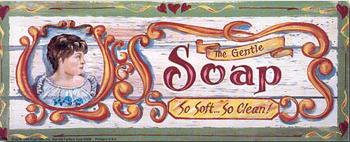
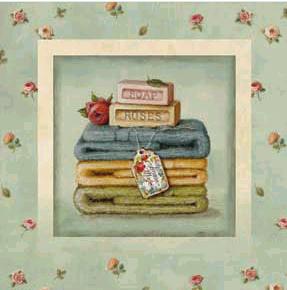
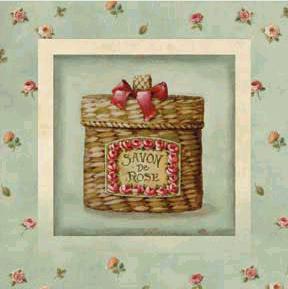
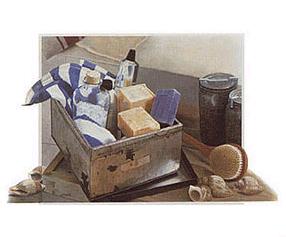
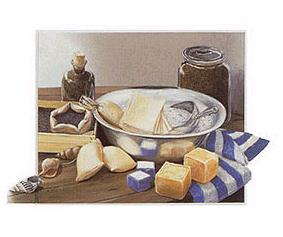
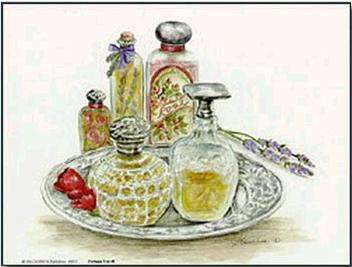
Beautiful Soap Prints from AllPosters.com Perfume Prints at AllPosters.com
Visit my Decorating with Framed
Prints page Visit my Italian Homes and
Gardens page

Italian
Soaps and Scents: L'Amande, Perfume Tips, On-Line Sellers, Perfume Brands, Prints...
Caterina de' Medici's
Perfumes
Soaps


PerfumesHistory
The biggest advancement for perfumes was the
development from 1868 of synthetic fragrances. The advantage
and benefit of synthetics in perfumes, combined with natural scents,
is the luxurious quality of the scent. It's the synthetics,
mainly aldehydes, that give perfume it's 'perfuminess'.The Perfumes of Caterina de' Medici
While removing the water that flooded his store, he found in his
laboratory's basement, an antique manuscript containing the
formulas. It was a remarkable discovery but not completely a
surprise. The perfume shop had been a perfume/apothecary shop
since the Middle Ages. During the Renaissance, the Medici
Palace was across the square and the Medici would commission
fragrances from the shop.
From the formulas commissioned for Catherine de' Medici, Dr. Massimo
chose the one he thought most beautiful, named it for her and
trademarked her Italian name, Caterina de' Medici, for the perfume.
The other fragrances of the I Profumi di Firenze collection
are based on actual Medici formulas discovered in the manuscript or
blends favored by the Renaissance nobility that were passed down
through the shop owners. Interestingly, they called the
potions odorifere acque, or scented waters.How to Choose a Perfume
Test
a perfume's 'persistance' or persistence, meaning how
long does it remain on your skin. Until recently,
Italian perfumes were notorious for having almost no 'persistance'.
Now all major perfumes are made by multi-national conglomerates,
so all have 'persistance' but not all are the same.
Perfume Discount Stores On-Line
Fragrance Net Products at Amazon.com
Caterina de' Medici Perfume scents:
Sicily
by Dolce & Gabbana: rich
bouquet of oriental flowers
D&G
Light Blue: lemon, apple, freesia, jasmine, musk, amber
Prada:
bergamot, orange, mimosa, rose, patchouli, musk, sandalwood
Moschino
Coutour by Moschino: floral, woody, musk
Acqua
di Gio by Armani: floral fragrance
Cerruti
1881 by Nina Cerruti: flowers, linen, musk, sandalwood
Blue
Jeans by Versace: flowery, woodsy, citrus
Ferrari
Red by Ferrari: fresh, woodsy scent
Ferre:
flowery, woodsy, with a hint of spice
Ferragamo:
lavender, rosemary, carnation, amber
Roma
by Laura Biagiotti: fruity resins, flowers, vanilla, musk
Dolce
& Gabbana: spicy, lavender, amber. lemon,
orange, sage, cedar, tobacco
Tribu
by Benetton: fruits, florals, amber,
sandalwood
Fendi:
woody, leather, rose, sandalwood, amber, musk
Rush
by Gucci: woody, musky (they claim it
'transports you into a dazzling, sensual delirium', oh my!)
Colors
by Benetton: oriental, floral, orange, marigold, vanilla
Sensi
by Giorgio Armani: soft exotic flowers
Roberto
Cavalli: bergamot, magnolia, rose, freesia, orchid, amber,
patchouli, sandalwood, musk.
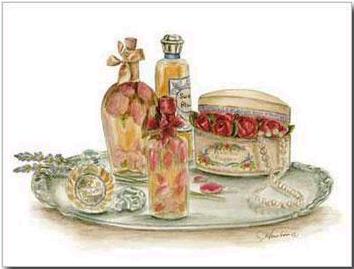
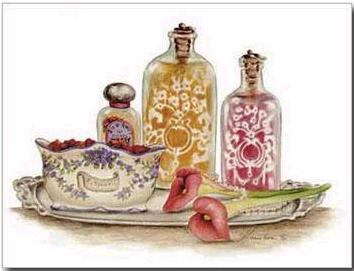
Perfume Trio IV
Angelini, Mariapia & Marinella
Art Print at AllPosters.com
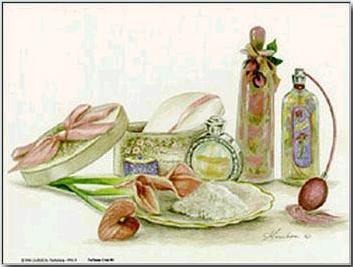
Perfume Trio II
Angelini, Mariapia & Marinella
Art Print at AllPosters.com
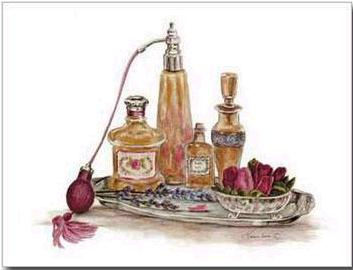
Perfume Trio I
Angelini, Mariapia & Marinella
Art Print at AllPosters.com
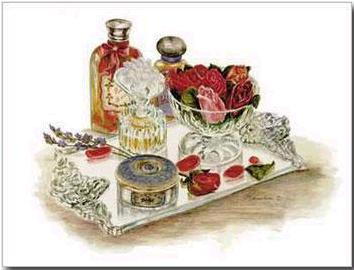
Perfume Bottle Setting I
Art Print at AllPosters.com