Candida Martinelli's Italophile Site

Main Page This site celebrates Italian culture for the enjoyment of children and adults. Site-Overview

Google
 

Candida Martinelli's Italophile Site Shops at: Zazzle & PrintFection


Dante Aligheri and his Divine Creation:  The Divine Comedy (La Commedia)

Books

Petrarch

M. Aurelius

Brownings

Illuminations

On-line Italian-English side-by-side version below


(Lots of text to load on this page, be patient.  The Comedy text doesn't appear immediately.)


Illustration from "The Divine Comedy" by Dante Alighieri Paris, Published 1885
Illustration from "The Divine Comedy" by Dante Alighieri Paris, Published 1885 Giclee Print
Dore, Gustave
AllPosters.com


Virgil and Dante, Illustration from "The Divine Comedy" by Dante Alighieri Paris, Published 1885
Virgil and Dante, Illustration from "The Divine Comedy" by Dante Alighieri Paris, Published 1885 Giclee Print
Dore, Gustave
AllPosters.com


Virgil and Dante, Illustration from "The Divine Comedy" by Dante Alighieri Paris, Published 1885
Virgil and Dante, Illustration from "The Divine Comedy" by Dante Alighieri Paris, Published 1885 Giclee Print
Dore, Gustave
AllPosters.com


Minos, King of Crete, Illustration from "The Divine Comedy" by Dante Alighieri
Minos, King of Crete, Illustration from "The Divine Comedy" by Dante Alighieri Giclee Print
Dore, Gustave
AllPosters.com


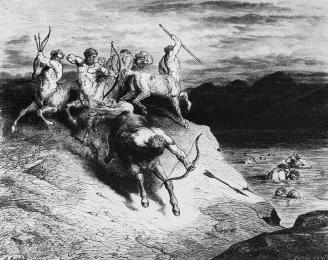
Centaurs, Illustration from "The Divine Comedy" by Dante Alighieri Paris, Published 1885
Centaurs, Illustration from "The Divine Comedy" by Dante Alighieri Paris, Published 1885 Giclee Print
Dore, Gustave
AllPosters.com


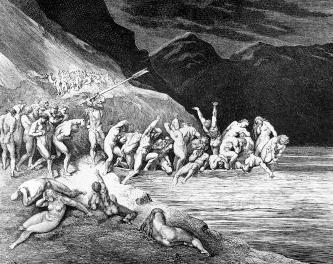
Charon, Illustration from "The Divine Comedy" by Dante Alighieri Paris, Published 1885
Charon, Illustration from "The Divine Comedy" by Dante Alighieri Paris, Published 1885 Giclee Print
Dore, Gustave
AllPosters.com


Virgil and Dante, Illustration from "The Divine Comedy" by Dante Alighieri Paris, Published 1885
Virgil and Dante, Illustration from "The Divine Comedy" by Dante Alighieri Paris, Published 1885 Giclee Print
Dore, Gustave
AllPosters.com

Illustration from "The Divine Comedy" by Dante Alighieri Paris, Published 1885
Illustration from "The Divine Comedy" by Dante Alighieri Paris, Published 1885 Giclee Print
Dore, Gustave
AllPosters.com


Illustration from "The Divine Comedy" by Dante Alighieri Paris, Published 1885
Illustration from "The Divine Comedy" by Dante Alighieri Paris, Published 1885 Giclee Print
Dore, Gustave
AllPosters.com


Illustration from "The Divine Comedy" by Dante Alighieri Paris, Published 1885
Illustration from "The Divine Comedy" by Dante Alighieri Paris, Published 1885 Giclee Print
Dore, Gustave
AllPosters.com

The full text, the most famous illustrations, an audio version, and a show to watch on DVD that provides a wonderful introduction to Dante's famous work, all from Amazon.com.


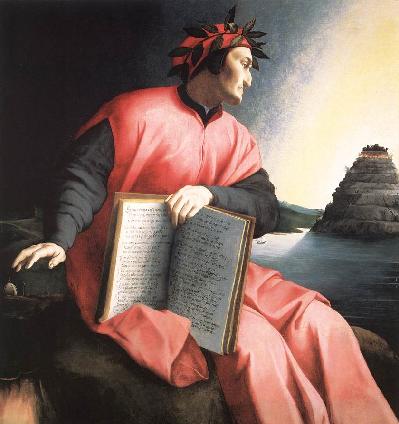
Dante Aligheri (b.1265 - d.1321), Florence, Italy's most famous son, lived during turbulent times.
Europe was in the process, sometimes the violent process, of deciding how much influence the church should have in running matters of state. 

Today's Europe is secular, meaning that church and state are separate, and rarely interfere with each other, and refrain from dictating to each other.  Secular states allow for greater religious diversity and greater personal liberty than religious states.  But that was anything but the case during Dante's time.

Dante believed in God, and in secularism.  He was persecuted for his secular beliefs by banishment from his beloved nation-state of Florence.  So Dante, in exile, sought solace in his religious beliefs:  he wrote The Divine Comedy.

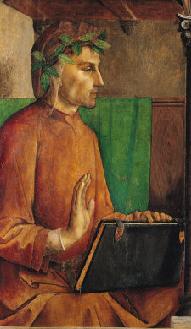
Portrait of Dante Alighieri (1265-1321), circa 1475
Portrait of Dante Alighieri (1265-1321), circa 1475 Giclee Print
Gent, Joos van
AllPosters.com

Imagine you had been slighted by many of your friends, defeated by your enemies, and was made victim to the machinations of corrupt leaders and civil servants.  Now imagine, what your revenge might be.

Dante was not a violent man, so his revenge was not bloody.  Dante was a writer, so his revenge took the form of a book, The Divine Comedy, in verse that would both entertain and educate readers, and malign those responsible for his situation.

If Dante's book were solely rants against his enemies, it would never have stood the test of time.  In fact, the parts of The Divine Comedy in which he mentions by name the leaders and rich of his day, wallowing in Hell or Purgatory, are least accessible to us today.  We don't know who these people are, so we miss the joke.  (However, what a wonderful revenge, to make these people, for eternity, examples of Hell's and Purgatory's torments!)

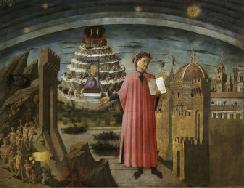
Dante Alighieri Illuminated the Town of Florence
Dante Alighieri Illuminated the Town of Florence Giclee Print
Domenico Di...
AllPosters.com

But by making The Divine Comedy a detailed description of Hell, Purgatory and Paradise, and detailing the sins and qualities that land us in each of these zones of the netherworld, Dante ensured that his tale would appeal to readers forever.

It's immensely fun, and delightfully satisfying, to read an imaginative account of where your own enemies might end up, and how they'll suffer eternal damnation for what they've done to you during your lifetime.  In fact, the most entertaining section of The Divine Comedy is Hell!

Virgil and Dante, Illustration from "The Divine Comedy" by Dante Alighieri Paris, Published 1885
Virgil and Dante, Illustration from "The Divine Comedy" by Dante Alighieri Paris, Published 1885 Giclee Print
Dore, Gustave
AllPosters.com

Dante encourages us to behave better in life, just in case his imaginings are anywhere near the truth of what becomes of us after death.  Just like religions themselves, Dante, by illustrating the Christian view of afterlife, gives us hope of rewards after death for self-restraint during life.  Justice comes to all, even if a bit late, and it lasts for eternity.

To top all that off, Dante accomplished another goal of his, one that he had cherished for a long time.  He strongly believed that beautiful literature could be written in the daily language of Florentines.  So he wrote The Divine Comedy in ordinary Italian, rather than in the preferred Latin.  The book's success did wonders for raising the respect level of the Italian language.

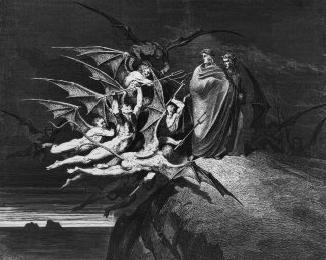
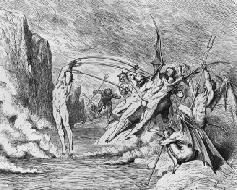
Devils, Illustration from "The Divine Comedy" by Dante Alighieri Paris, Published 1885
Devils, Illustration from "The Divine Comedy" by Dante Alighieri Paris, Published 1885 Giclee Print
Dore, Gustave
AllPosters.com

Amazingly, Dante's Italian is very readable to student's of today's Italian.  It is not like the middle-English literature written in the 1300s, or even like Shakespearean English from the 1600s.  Dante's Italian is accessible, especially when accompanied, side-by-side, by an English translation.  So I report the text below in both English and Italian, side-by-side.

But remember, there are scholars who study The Divine Comedy all their scholarly lives.  There are books published yearly interpreting everything from Dante's use of numbers, names, places, stars, words, smells, sounds, light, dark, literary figures--oh, you get the picture.

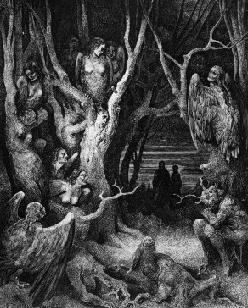
Harpies, Illustration from "The Divine Comedy" by Dante Alighieri Paris, Published 1885
Harpies, Illustration from "The Divine Comedy" by Dante Alighieri Paris, Published 1885 Giclee Print
Dore, Gustave
AllPosters.com

But that doesn't mean the average reader cannot enjoy The Divine Comedy.  Take my advice:  kick anyone who tries to tell you The Divine Comedy is too complex, or that you need an accompanying explanatory book ten times the length of the poem.  If you enjoy your first read of Dante's entertaining story, you can always consult those books later.

My advice would be to start with the parts that interest you the most.  For most people, that would be Hell.  Those wonderful levels of Hell Dante describes with various sinners and their punishments that fit their crimes, are full of juicy, gory details.

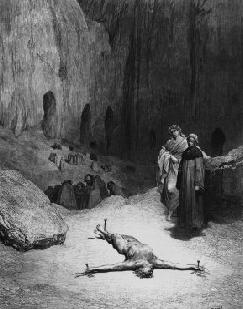
Crucified Man, Illustration from "The Divine Comedy" by Dante Alighieri Paris, Published 1885
Crucified Man, Illustration from "The Divine Comedy" by Dante Alighieri Paris, Published 1885 Giclee Print
Dore, Gustave
AllPosters.com

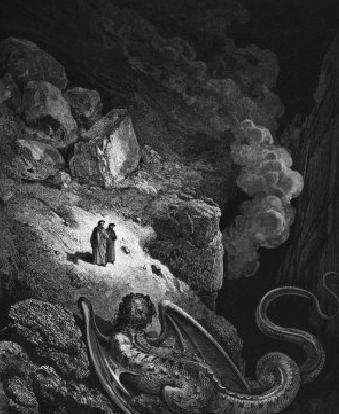
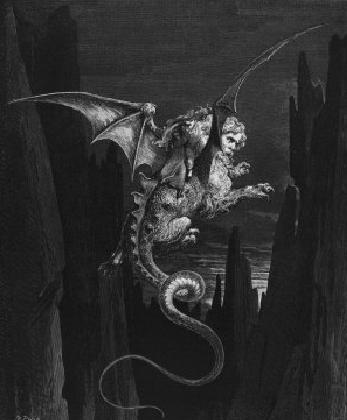
The artist Gustave Dore created dark illustrations of those gory details for an 1885 edition of The Divine Comedy.  I've put many of those designs on this page for your enjoyment.  For other illustrations, from other editions of the book, check:

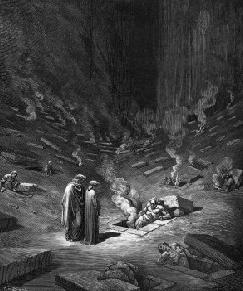
Heresiarchs, Illustration from "The Divine Comedy" by Dante Alighieri Paris, Published 1885
Heresiarchs, Illustration from "The Divine Comedy" by Dante Alighieri Paris, Published 1885 Giclee Print
Dore, Gustave
AllPosters.com


If you want an overview of the story, characters, themes, Dante's life, etc., visit the free and invaluable Novel Guide Summary

If you want to see two translations to English, side-by-side, visit this Columbia University site.

For a sampling of the scholar's Dante, visit this site and select 'Dante Studies' from the menu.

To learn more about the early publications of the book, visit Renaissance Dante in Print. They have a fascinating collection of title pages from editions from 1507 to 1716, showing the progression of 'The Comedy by the Divine Poet Dante Aligheri' to 'The Dante' or just 'Dante' to what we use today 'The Divine Comedy by Dante'.


Here below is The Divine Comedy in English and Italian, side-by-side. 

(Lots of text to load on this page, be patient.  The Comedy text doesn't load immediately.)

The Divine Comedy


By


Dante Alighieri


Incipit Comoedia Dantis Alagherii,

Florentini natione, non moribus.


Hell

Purgatory

Paradise


La Commedia


Di


Dante Alighieri


Incipit Comoedia Dantis Alagherii,

Florentini natione, non moribus.


Inferno

Purgatorio

Paradiso


Hell


Canto Highlights:


I. The Dark Forest.  The Hill of Difficulty.  The Panther, the Lion, and the Wolf.  Virgil.


II. The Descent.  Dante's Protest and Virgil's Appeal.  The Intercession of the Three Ladies Benedight.


III. The Gate of Hell.  The Inefficient or Indifferent. Pope Celestine V.  The Shores of Acheron.  Charon.  The Earthquake and the Swoon.


IV. The First Circle, Limbo: Virtuous Pagans and the Unbaptized. The Four Poets, Homer, Horace, Ovid, and Lucan.  The Noble Castle of Philosophy.


V. The Second Circle: The Wanton.  Minos.  The Infernal Hurricane. Francesca da Rimini.


VI. The Third Circle: The Gluttonous.  Cerberus.  The Eternal Rain. Ciacco.  Florence.


VII. The Fourth Circle: The Avaricious and the Prodigal. Plutus.  Fortune and her Wheel.  The Fifth Circle: The Irascible and the Sullen.  Styx.


VIII. Phlegyas.  Philippo Argenti.  The Gate of the City of Dis.


IX. The Furies and Medusa.  The Angel.  The City of Dis. The Sixth Circle: Heresiarchs.


X. Farinata and Cavalcante de' Cavalcanti.  Discourse on the Knowledge of the Damned.


XI. The Broken Rocks.  Pope Anastasius.  General Description of the Inferno and its Divisions.


XII. The Minotaur.  The Seventh Circle: The Violent.

The River Phlegethon.  The Violent against their Neighbours. The Centaurs.  Tyrants.


XIII. The Wood of Thorns.  The Harpies.  The Violent against themselves.  Suicides.  Pier della Vigna. Lano and Jacopo da Sant' Andrea.


XIV. The Sand Waste and the Rain of Fire.  The Violent against God. Capaneus.  The Statue of Time, and the Four Infernal Rivers.


XV. The Violent against Nature.  Brunetto Latini.


XVI. Guidoguerra, Aldobrandi, and Rusticucci.  Cataract of the River of Blood.


XVII. Geryon.  The Violent against Art.  Usurers.  Descent into the Abyss of Malebolge.


XVIII. The Eighth Circle, Malebolge: The Fraudulent and the Malicious.  The First Bolgia: Seducers and Panders.  Venedico Caccianimico.  Jason.  The Second Bolgia: Flatterers.  Allessio Interminelli.  Thais.


XIX. The Third Bolgia: Simoniacs.  Pope Nicholas III.

Dante's Reproof of corrupt Prelates.


XX. The Fourth Bolgia: Soothsayers.  Amphiaraus, Tiresias, Aruns, Manto, Eryphylus, Michael Scott, Guido Bonatti, and Asdente.  Virgil reproaches Dante's Pity.  Mantua's Foundation.


XXI. The Fifth Bolgia: Peculators.  The Elder of Santa Zita.  Malacoda and other Devils.


XXII. Ciampolo, Friar Gomita, and Michael Zanche. The Malabranche quarrel.


XXIII. Escape from the Malabranche.  The Sixth Bolgia: Hypocrites.  Catalano and Loderingo.  Caiaphas.


XXIV. The Seventh Bolgia: Thieves.  Vanni Fucci.  Serpents.


XXV. Vanni Fucci's Punishment.  Agnello Brunelleschi,

Buoso degli Abati, Puccio Sciancato, Cianfa de' Donati, and Guercio Cavalcanti.


XXVI. The Eighth Bolgia: Evil Counsellors.  Ulysses and Diomed.  Ulysses' Last Voyage.


XXVII. Guido da Montefeltro.  His deception by Pope Boniface VIII.


XXVIII. The Ninth Bolgia: Schismatics.  Mahomet and Ali.  Pier da Medicina, Curio, Mosca, and Bertrand de Born.


XXIX. Geri del Bello.  The Tenth Bolgia: Alchemists.

Griffolino d' Arezzo and Capocchino.


XXX. Other Falsifiers or Forgers.  Gianni Schicchi, Myrrha, Adam of Brescia, Potiphar's Wife, and Sinon of Troy.


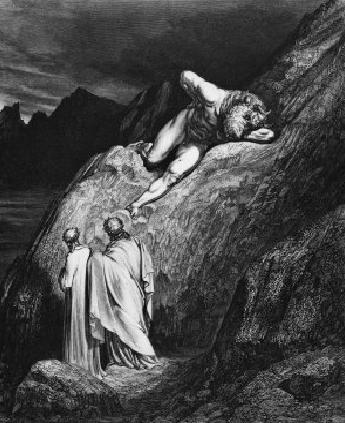
XXXI. The Giants, Nimrod, Ephialtes, and Antaeus.

Descent to Cocytus.


XXXII. The Ninth Circle: Traitors.  The Frozen Lake of Cocytus.  First Division, Caina: Traitors to their Kindred.  Camicion de' Pazzi.  Second Division, Antenora:  Traitors to their Country.  Dante questions Bocca degli Abati.  Buoso da Duera.


XXXIII. Count Ugolino and the Archbishop Ruggieri.  The Death of Count Ugolino's Sons.  Third Division of the Ninth Circle, Ptolomaea: Traitors to their Friends.  Friar Alberigo, Branco d' Oria.


XXXIV. Fourth Division of the Ninth Circle, the Judecca:  Traitors to their Lords and Benefactors.  Lucifer, Judas Iscariot, Brutus, and Cassius. The Chasm of Lethe.  The Ascent.


Inferno


Canto Links:


Canto I


Canto II


Canto III


Canto IV


Canto V


Canto VI


Canto VII


Canto VIII


Canto IX


Canto X


Canto XI


Canto XII


Canto XIII


Canto XIV


Canto XV


Canto XVI


Canto XVII


Canto XVIII


Canto XIX


Canto XX


Canto XXI


Canto XXII


Canto XXIII


Canto XXIV


Canto XXV


Canto XXVI


Canto XXVII


Canto XXVIII


Canto XXIX


Canto XXX


Canto XXXI


Canto XXXII


Canto XXXIII


Canto XXXIV


Inferno: Canto I


Midway upon the journey of our life

  I found myself within a forest dark,

  For the straightforward pathway had been lost.


Ah me! how hard a thing it is to say

  What was this forest savage, rough, and stern,

  Which in the very thought renews the fear.


So bitter is it, death is little more;

  But of the good to treat, which there I found,

  Speak will I of the other things I saw there.


I cannot well repeat how there I entered,

  So full was I of slumber at the moment

  In which I had abandoned the true way.


But after I had reached a mountain's foot,

  At that point where the valley terminated,

  Which had with consternation pierced my heart,


Upward I looked, and I beheld its shoulders,

  Vested already with that planet's rays

  Which leadeth others right by every road.


Then was the fear a little quieted

  That in my heart's lake had endured throughout

  The night, which I had passed so piteously.


And even as he, who, with distressful breath,

  Forth issued from the sea upon the shore,

  Turns to the water perilous and gazes;


So did my soul, that still was fleeing onward,

  Turn itself back to re-behold the pass

  Which never yet a living person left.


After my weary body I had rested,

  The way resumed I on the desert slope,

  So that the firm foot ever was the lower.


And lo! almost where the ascent began,

  A panther light and swift exceedingly,

  Which with a spotted skin was covered o'er!


And never moved she from before my face,

  Nay, rather did impede so much my way,

  That many times I to return had turned.


The time was the beginning of the morning,

  And up the sun was mounting with those stars

  That with him were, what time the Love Divine


At first in motion set those beauteous things;

  So were to me occasion of good hope,

  The variegated skin of that wild beast,


The hour of time, and the delicious season;

  But not so much, that did not give me fear

  A lion's aspect which appeared to me.


He seemed as if against me he were coming

  With head uplifted, and with ravenous hunger,

  So that it seemed the air was afraid of him;


And a she-wolf, that with all hungerings

  Seemed to be laden in her meagreness,

  And many folk has caused to live forlorn!


She brought upon me so much heaviness,

  With the affright that from her aspect came,

  That I the hope relinquished of the height.


And as he is who willingly acquires,

  And the time comes that causes him to lose,

  Who weeps in all his thoughts and is despondent,


E'en such made me that beast withouten peace,

  Which, coming on against me by degrees

  Thrust me back thither where the sun is silent.


While I was rushing downward to the lowland,

  Before mine eyes did one present himself,

  Who seemed from long-continued silence hoarse.


When I beheld him in the desert vast,

  "Have pity on me," unto him I cried,

  "Whiche'er thou art, or shade or real man!"


He answered me: "Not man; man once I was,

  And both my parents were of Lombardy,

  And Mantuans by country both of them.


'Sub Julio' was I born, though it was late,

  And lived at Rome under the good Augustus,

  During the time of false and lying gods.


A poet was I, and I sang that just

  Son of Anchises, who came forth from Troy,

  After that Ilion the superb was burned.


But thou, why goest thou back to such annoyance?

  Why climb'st thou not the Mount Delectable,

  Which is the source and cause of every joy?"


"Now, art thou that Virgilius and that fountain

  Which spreads abroad so wide a river of speech?"

  I made response to him with bashful forehead.


"O, of the other poets honour and light,

  Avail me the long study and great love

  That have impelled me to explore thy volume!


Thou art my master, and my author thou,

  Thou art alone the one from whom I took

  The beautiful style that has done honour to me.


Behold the beast, for which I have turned back;

  Do thou protect me from her, famous Sage,

  For she doth make my veins and pulses tremble."


"Thee it behoves to take another road,"

  Responded he, when he beheld me weeping,

  "If from this savage place thou wouldst escape;


Because this beast, at which thou criest out,

  Suffers not any one to pass her way,

  But so doth harass him, that she destroys him;


And has a nature so malign and ruthless,

  That never doth she glut her greedy will,

  And after food is hungrier than before.


Many the animals with whom she weds,

  And more they shall be still, until the Greyhound

  Comes, who shall make her perish in her pain.


He shall not feed on either earth or pelf,

  But upon wisdom, and on love and virtue;

  'Twixt Feltro and Feltro shall his nation be;


Of that low Italy shall he be the saviour,

  On whose account the maid Camilla died,

  Euryalus, Turnus, Nisus, of their wounds;


Through every city shall he hunt her down,

  Until he shall have driven her back to Hell,

  There from whence envy first did let her loose.


Therefore I think and judge it for thy best

  Thou follow me, and I will be thy guide,

  And lead thee hence through the eternal place,


Where thou shalt hear the desperate lamentations,

  Shalt see the ancient spirits disconsolate,

  Who cry out each one for the second death;


And thou shalt see those who contented are

  Within the fire, because they hope to come,

  Whene'er it may be, to the blessed people;


To whom, then, if thou wishest to ascend,

  A soul shall be for that than I more worthy;

  With her at my departure I will leave thee;


Because that Emperor, who reigns above,

  In that I was rebellious to his law,

  Wills that through me none come into his city.


He governs everywhere, and there he reigns;

  There is his city and his lofty throne;

  O happy he whom thereto he elects!"


And I to him: "Poet, I thee entreat,

  By that same God whom thou didst never know,

  So that I may escape this woe and worse,


Thou wouldst conduct me there where thou hast said,

  That I may see the portal of Saint Peter,

  And those thou makest so disconsolate."


Then he moved on, and I behind him followed.


Inferno: Canto II


Day was departing, and the embrowned air

  Released the animals that are on earth

  From their fatigues; and I the only one


Made myself ready to sustain the war,

  Both of the way and likewise of the woe,

  Which memory that errs not shall retrace.


O Muses, O high genius, now assist me!

  O memory, that didst write down what I saw,

  Here thy nobility shall be manifest!


And I began: "Poet, who guidest me,

  Regard my manhood, if it be sufficient,

  Ere to the arduous pass thou dost confide me.


Thou sayest, that of Silvius the parent,

  While yet corruptible, unto the world

  Immortal went, and was there bodily.


But if the adversary of all evil

  Was courteous, thinking of the high effect

  That issue would from him, and who, and what,


To men of intellect unmeet it seems not;

  For he was of great Rome, and of her empire

  In the empyreal heaven as father chosen;


The which and what, wishing to speak the truth,

  Were stablished as the holy place, wherein

  Sits the successor of the greatest Peter.


Upon this journey, whence thou givest him vaunt,

  Things did he hear, which the occasion were

  Both of his victory and the papal mantle.


Thither went afterwards the Chosen Vessel,

  To bring back comfort thence unto that Faith,

  Which of salvation's way is the beginning.


But I, why thither come, or who concedes it?

  I not Aeneas am, I am not Paul,

  Nor I, nor others, think me worthy of it.


Therefore, if I resign myself to come,

  I fear the coming may be ill-advised;

  Thou'rt wise, and knowest better than I speak."


And as he is, who unwills what he willed,

  And by new thoughts doth his intention change,

  So that from his design he quite withdraws,


Such I became, upon that dark hillside,

  Because, in thinking, I consumed the emprise,

  Which was so very prompt in the beginning.


"If I have well thy language understood,"

  Replied that shade of the Magnanimous,

  "Thy soul attainted is with cowardice,


Which many times a man encumbers so,

  It turns him back from honoured enterprise,

  As false sight doth a beast, when he is shy.


That thou mayst free thee from this apprehension,

  I'll tell thee why I came, and what I heard

  At the first moment when I grieved for thee.


Among those was I who are in suspense,

  And a fair, saintly Lady called to me

  In such wise, I besought her to command me.


Her eyes where shining brighter than the Star;

  And she began to say, gentle and low,

  With voice angelical, in her own language:


'O spirit courteous of Mantua,

  Of whom the fame still in the world endures,

  And shall endure, long-lasting as the world;


A friend of mine, and not the friend of fortune,

  Upon the desert slope is so impeded

  Upon his way, that he has turned through terror,


And may, I fear, already be so lost,

  That I too late have risen to his succour,

  From that which I have heard of him in Heaven.


Bestir thee now, and with thy speech ornate,

  And with what needful is for his release,

  Assist him so, that I may be consoled.


Beatrice am I, who do bid thee go;

  I come from there, where I would fain return;

  Love moved me, which compelleth me to speak.


When I shall be in presence of my Lord,

  Full often will I praise thee unto him.'

  Then paused she, and thereafter I began:


'O Lady of virtue, thou alone through whom

  The human race exceedeth all contained

  Within the heaven that has the lesser circles,


So grateful unto me is thy commandment,

  To obey, if 'twere already done, were late;

  No farther need'st thou ope to me thy wish.


But the cause tell me why thou dost not shun

  The here descending down into this centre,

  From the vast place thou burnest to return to.'


'Since thou wouldst fain so inwardly discern,

  Briefly will I relate,' she answered me,

  'Why I am not afraid to enter here.


Of those things only should one be afraid

  Which have the power of doing others harm;

  Of the rest, no; because they are not fearful.


God in his mercy such created me

  That misery of yours attains me not,

  Nor any flame assails me of this burning.


A gentle Lady is in Heaven, who grieves

  At this impediment, to which I send thee,

  So that stern judgment there above is broken.


In her entreaty she besought Lucia,

  And said, "Thy faithful one now stands in need

  Of thee, and unto thee I recommend him."


Lucia, foe of all that cruel is,

  Hastened away, and came unto the place

  Where I was sitting with the ancient Rachel.


"Beatrice" said she, "the true praise of God,

  Why succourest thou not him, who loved thee so,

  For thee he issued from the vulgar herd?


Dost thou not hear the pity of his plaint?

  Dost thou not see the death that combats him

  Beside that flood, where ocean has no vaunt?"


Never were persons in the world so swift

  To work their weal and to escape their woe,

  As I, after such words as these were uttered,


Came hither downward from my blessed seat,

  Confiding in thy dignified discourse,

  Which honours thee, and those who've listened to it.'


After she thus had spoken unto me,

  Weeping, her shining eyes she turned away;

  Whereby she made me swifter in my coming;


And unto thee I came, as she desired;

  I have delivered thee from that wild beast,

  Which barred the beautiful mountain's short ascent.


What is it, then?  Why, why dost thou delay?

  Why is such baseness bedded in thy heart?

  Daring and hardihood why hast thou not,


Seeing that three such Ladies benedight

  Are caring for thee in the court of Heaven,

  And so much good my speech doth promise thee?"


Even as the flowerets, by nocturnal chill,

  Bowed down and closed, when the sun whitens them,

  Uplift themselves all open on their stems;


Such I became with my exhausted strength,

  And such good courage to my heart there coursed,

  That I began, like an intrepid person:


"O she compassionate, who succoured me,

  And courteous thou, who hast obeyed so soon

  The words of truth which she addressed to thee!